

Recruitment is often described as a combination of techniques, tools, and best practices. It is less often considered as a process in its own right: one with a clear logic, critical stages, recurring inefficiencies, and specific conditions for success.
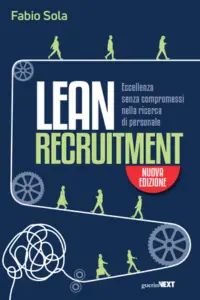
This is the perspective at the heart of Fabio Sola’s work. Sola, Senior Partner at PRAXI and Director of PRAXI Alliance, is the author of Lean Recruitment. Uncompromising Excellence in Recruitment (available in Italian), published by Guerini Next and recently released in a new edition.
In a live streaming interview with Fulvio Palmieri, Founder of RisorseUmane-HR.it, Sola discussed how recruitment processes are evolving and where organizations continue to create, or lose, value.
Lean thinking is widely applied in operations and manufacturing. What does it mean in the context of recruitment?
It means removing waste from the process and ensuring that time, energy, and resources are focused on activities that create genuine value.
In recruitment, that value concerns everyone involved: the company, the recruiter, the hiring manager, and, of course, the candidate. A good process identifies people who are well suited to both the role and the organization, while avoiding unnecessary steps, duplication, and inefficiency.
When you talk about waste, what is the most common or most damaging form?
There are two forms of waste that are particularly damaging.
The first is investing time and money in a search that does not result in a hire. The second, which is just as serious, is hiring the wrong person.
In that case, the cost is not only financial. It affects the organization, the team, and the individual, who may have left another role only to find themselves in a context that is not the right fit.
In the book, you place great importance on the initial kickoff. Why is this phase so critical?
Because the kickoff is where the foundations of the search are established. It is the moment to clarify what the organization really needs, what the role is expected to achieve, and what results the successful candidate will need to deliver.
If recruiters understand the context properly, rather than simply working through a checklist of requirements, they can assess candidates more intelligently. It is also at this stage that unrealistic or overly rigid expectations should be challenged.
So even the job description should be discussed, not simply applied.
Exactly. Job descriptions sometimes contain long lists of requirements without a clear distinction between what is essential and what is only desirable.
That distinction needs to be made at the beginning. Otherwise, companies risk searching for an ideal profile that may not exist in the market, or screening out candidates who could perform very well in the role.
Why has the multichannel approach replaced the traditional sequential model in recruitment?
Because the market has changed. In the past, companies could publish a job advertisement and wait for applications to arrive. Today, particularly in complex searches, that is no longer enough. Recruitment now requires several channels to be activated at the same time: professional social platforms, databases, networks, referrals, and direct outreach.
Waiting for one channel to be exhausted before opening another often means losing valuable time.
Which indicators should HR managers monitor to improve the recruitment process?
The percentage of successfully completed searches and time to fill are certainly important.
However, other indicators can provide a more meaningful view of process quality. One is the strength of the first shortlist. If the person eventually hired is usually among the first candidates presented, it suggests that the initial analysis and the overall process are working well.
Another important indicator is the real cost of recruitment, including the time spent by managers involved in interviews and decision-making.
Artificial intelligence is also becoming part of this landscape. Should it be seen as a risk or as a support tool?
I see it mainly as an opportunity, provided it is used with care. Artificial intelligence cannot replace human judgment. If used uncritically, it can introduce bias or discrimination into the process.
At the same time, it can provide valuable operational support, for example in reporting or in speeding up repetitive tasks. Used well, it allows people to dedicate more time to the higher-value parts of recruitment.
One of the most relevant current topics is pay transparency. What impact will it have on recruitment processes?
It will have a very practical impact. Companies will no longer be able to manage compensation discussions in an ambiguous or informal way. Certain traditional questions will need to be avoided, communication will need to be clearer from the outset, and organizations will need robust procedures to manage any deviation from the stated salary range.
This will not only be a regulatory change. It will also require a cultural and organizational shift.
In the new edition of the book, you also dedicate space to candidates. What can they learn from a lean approach?
They can learn not to waste energy. Candidates with many opportunities should be more selective and avoid entering recruitment processes they do not genuinely intend to pursue.
Those with fewer opportunities, on the other hand, should prepare very carefully: gathering information, approaching interviews with greater awareness, and paying attention to details that may seem simple but still matter, such as the setting of a video call or the way they present themselves.